Sunday, September 17, 2006

Oddly Elementary

Basedow ElementarwerkElementarwerk by Basedow 1774
(see previous post but this site has a different range of images)


Aus Schummels Kinderspielen und Gesprächen'Aus Schummels Kinderspielen und Gesprächen. Theil (1778)'
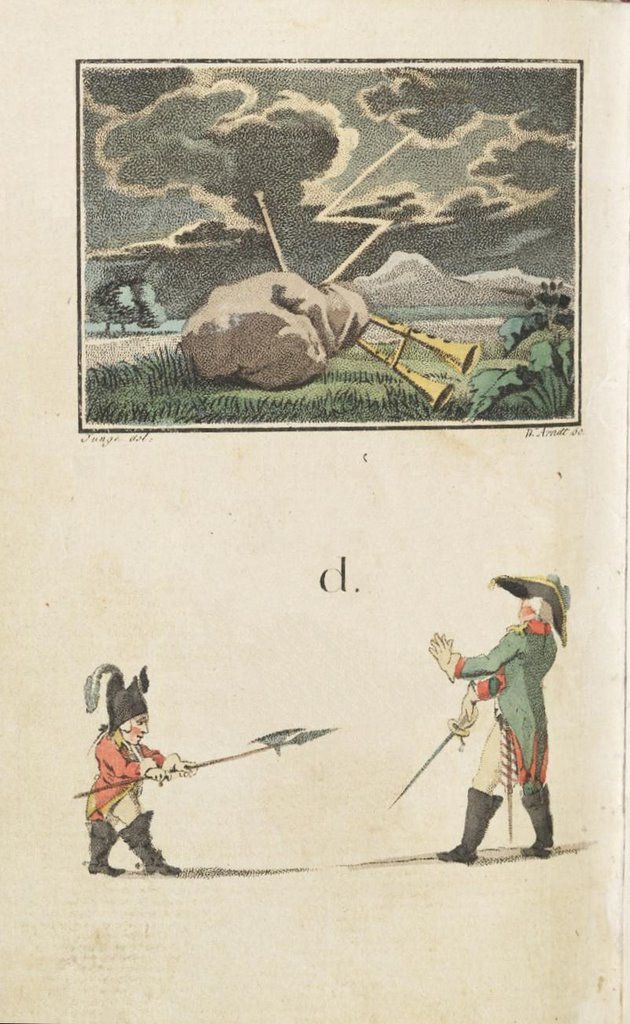

Aus Campes Sämmtlichen Kinder und Jugendschrifte'Aus Campes Sämmtlichen Kinder und Jugendschriften. (1807)'


New Zealander in Aus Campes Sämmtlichen Kinder und Jugendschrifte'Aus Campes Sämmtlichen Kinder und Jugendschriften. (1807)'
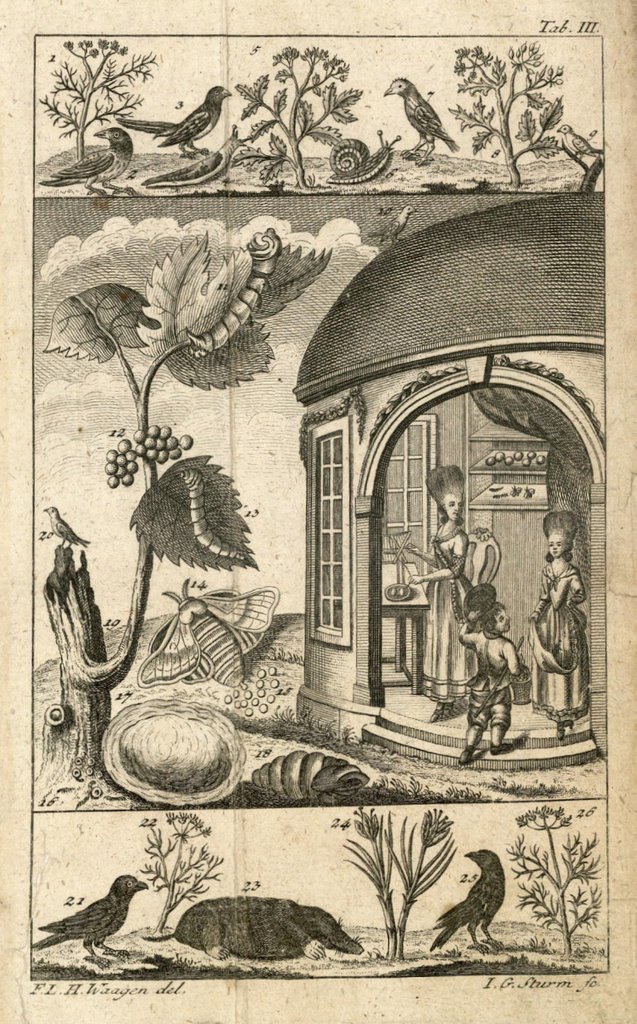

Aus Raffs Naturgeschichte für Kinder'Aus Raffs Naturgeschichte für Kinder (1783)'
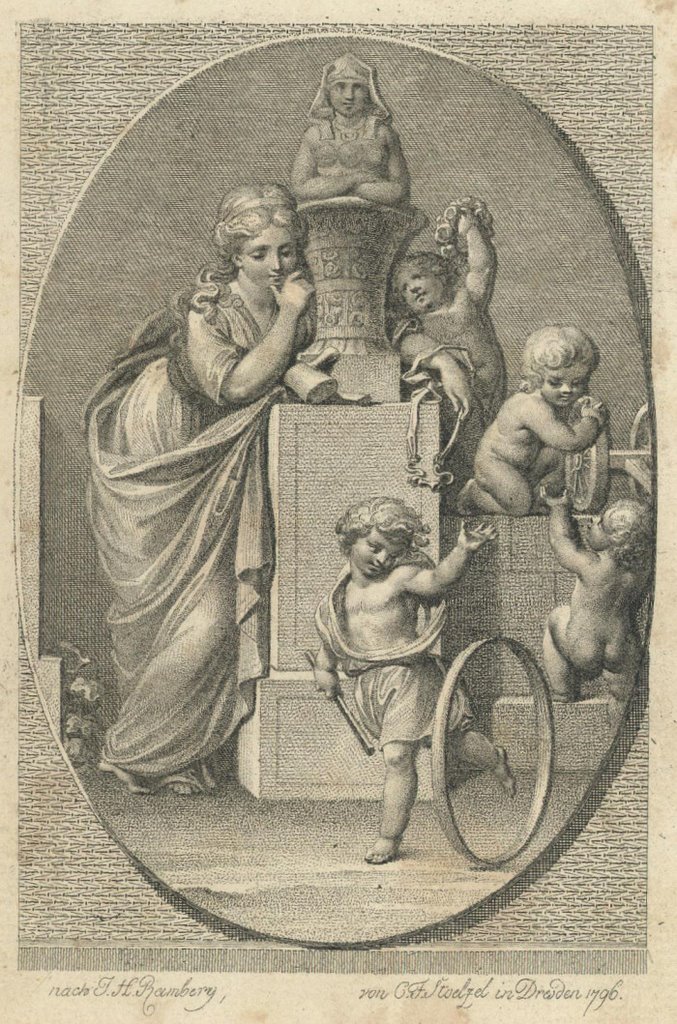

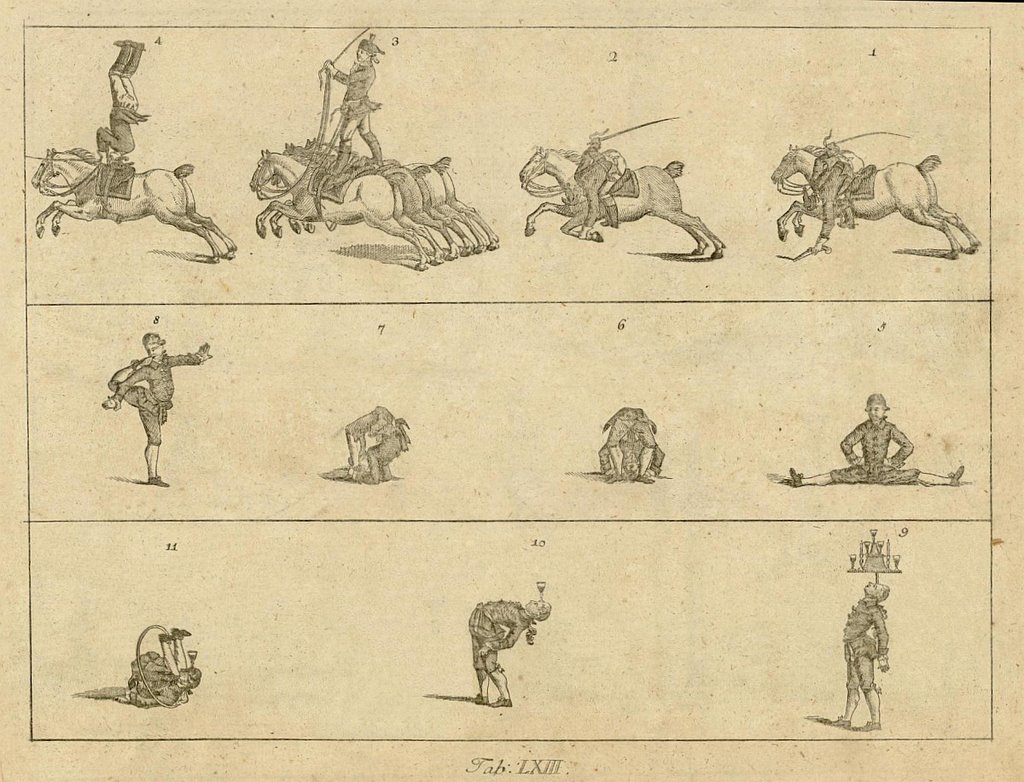
Aus GuthsMuths’ Spielen zur Übung und Erholung'Aus GuthsMuths’ Spielen zur Übung und Erholung (1796)'


Aus Schöneichs Merkwürdigem Ehrengedächtnis'Aus Schöneichs Merkwürdigem Ehrengedächtnis von dem
christlöblichen Leben und Tode des Heineken (1726)'
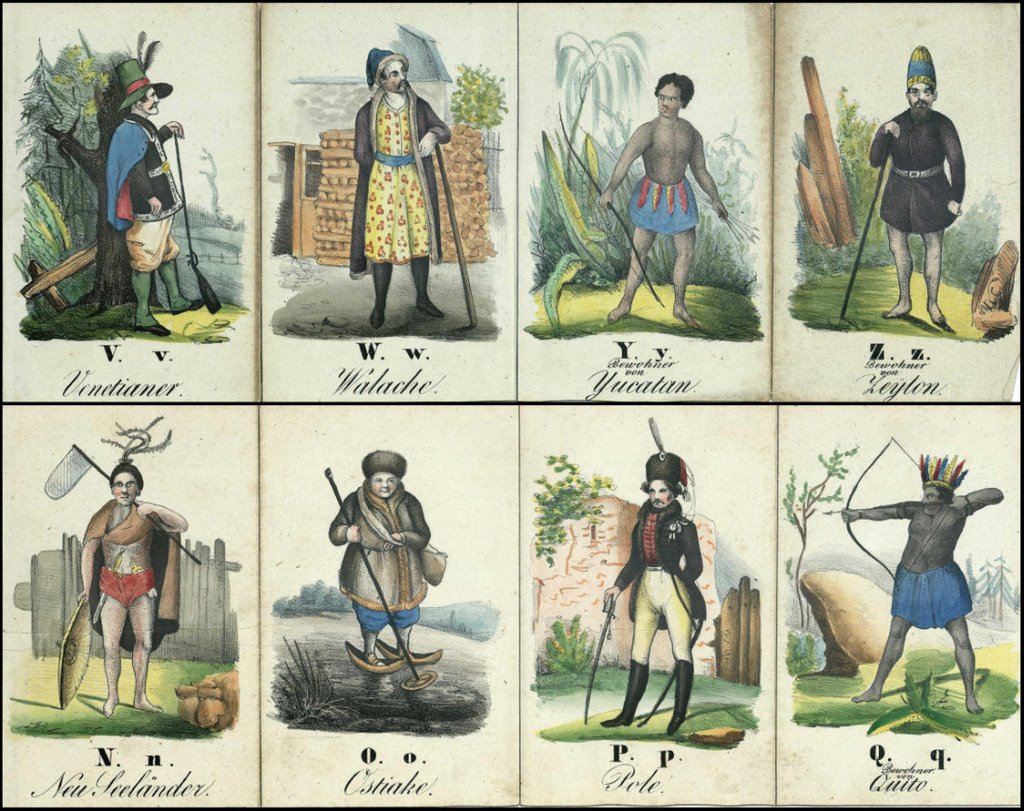

Nationen-Alphabet'Aus dem Neuen Nationen-Alphabet (Leporello, 1835)'
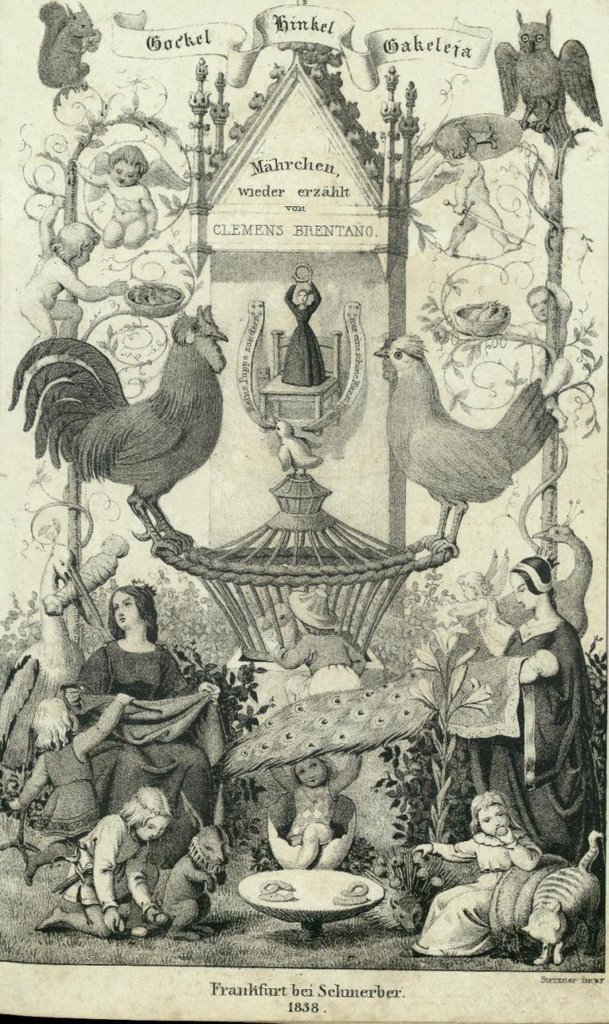

Aus Brentanos Gockel'Aus Brentanos Gockel, Hinkel, Gackeleia (1838)'


Aus Brentanos Gockel, Hinkel, Gackeleia'Aus Brentanos Gockel, Hinkel, Gackeleia (1838)'
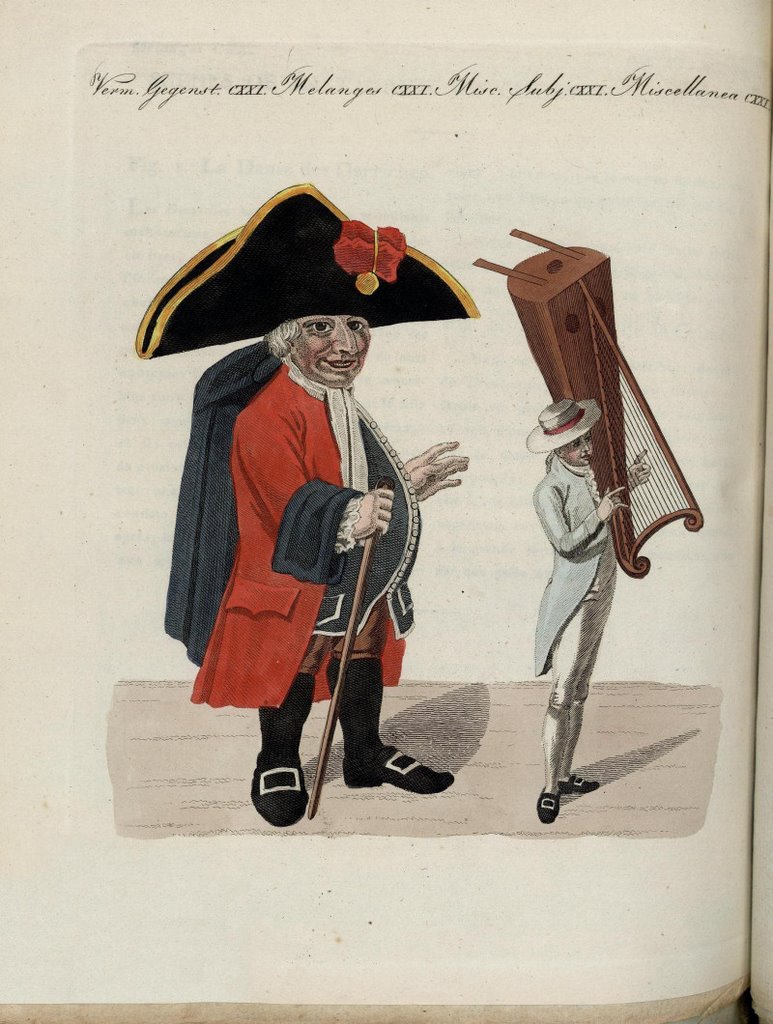

Aus Bertuchs Bilderbuch für Kinder'Aus Bertuchs Bilderbuch für Kinder. (1807)'
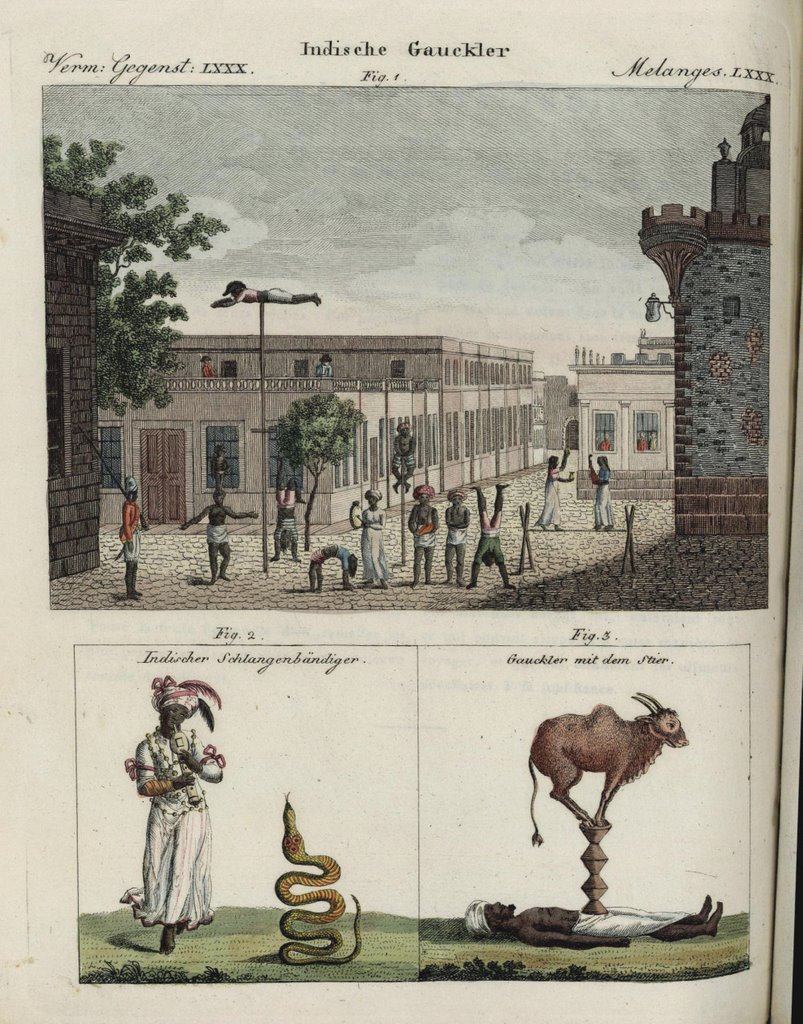

Aus Bertuchs Bilderbuch für Kinder a'Aus Bertuchs Bilderbuch für Kinder. (1807)'

{As always, click on the images for larger versions - most have had background repair +/- removal of library stamps}


Georg-August-Universität in Göttingen
have a number of complete childrens' books together with a large thematic image database covering everything from natural science to ABC books and more. Never let it be said that old childrens' books aren't packed full of weirdness goodness.

This comes circuitously via Netbib who cover german digital issues. I get their newsletter and despite the fact that I can't read it at all (virtually), they always have excellent repository links.

Speaking of the non-english world, Netlex have a new address --- this is a stellar and wide-ranging art/culture site, mostly in french.

Saturday, September 16, 2006

Paulus Kal: Kunst des Fechtens II

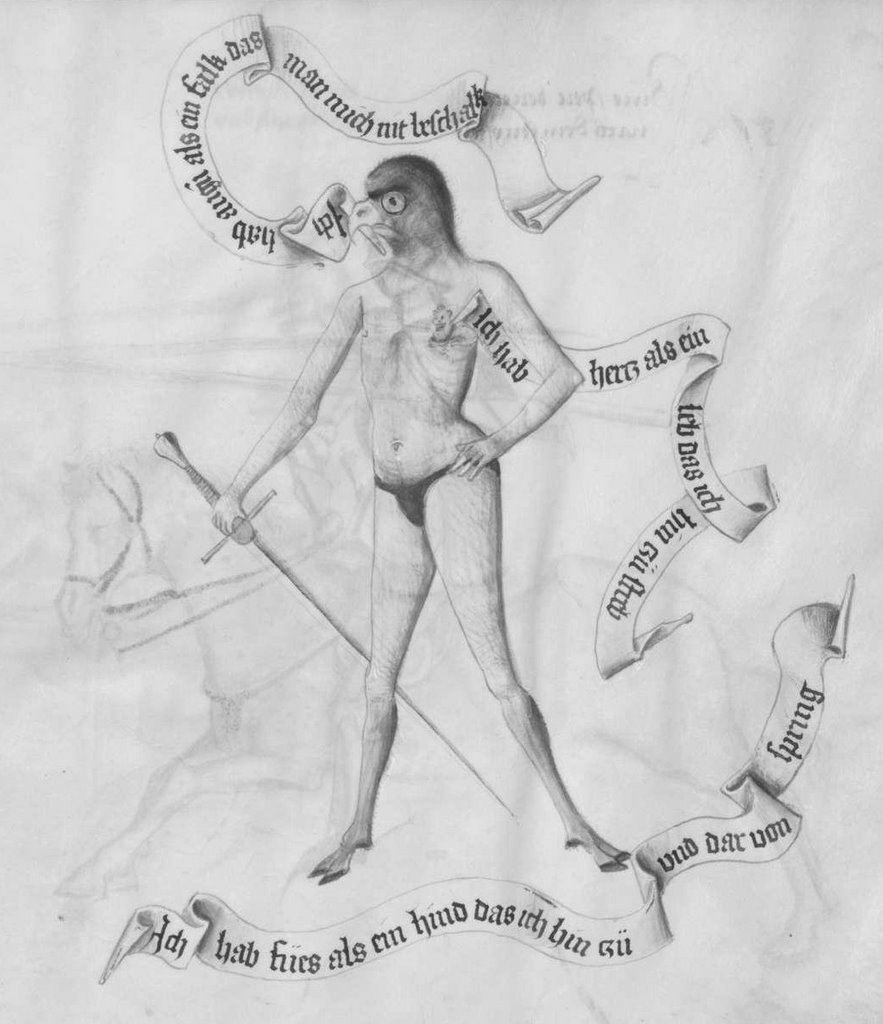
birdheaded man with hooves

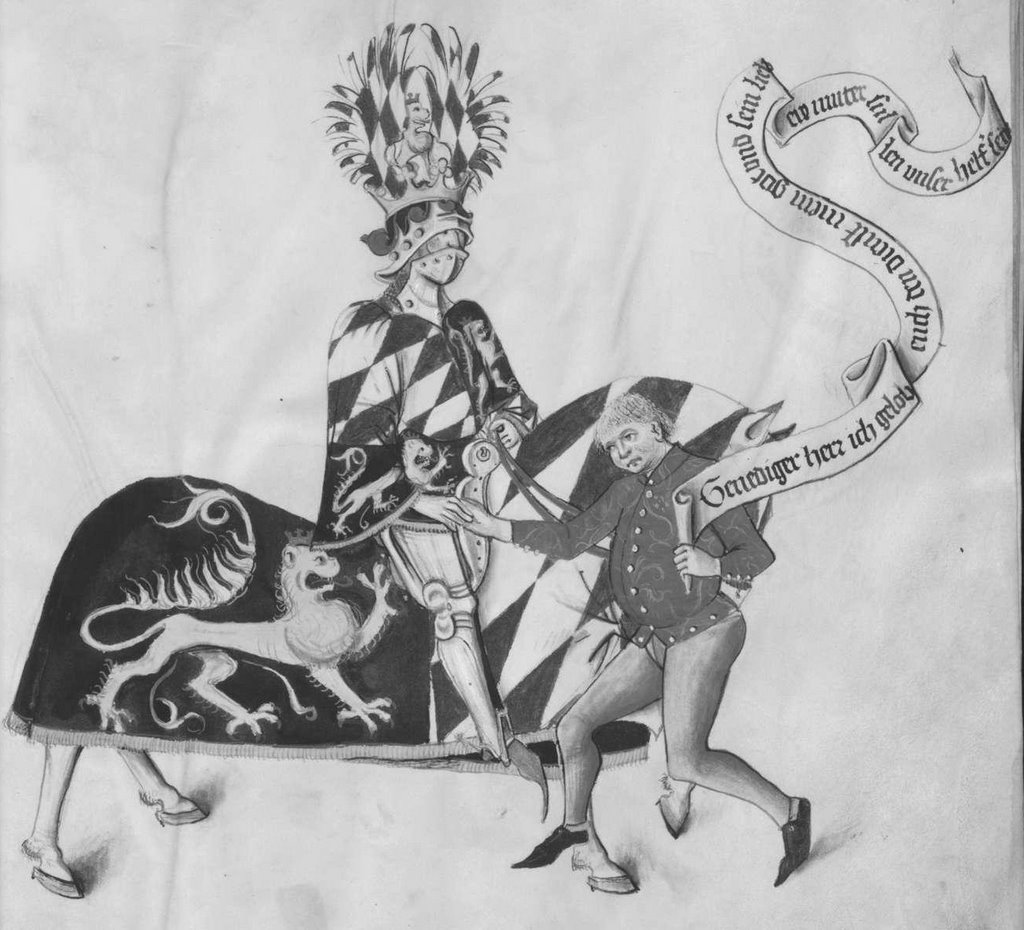
draped knight on draped horse

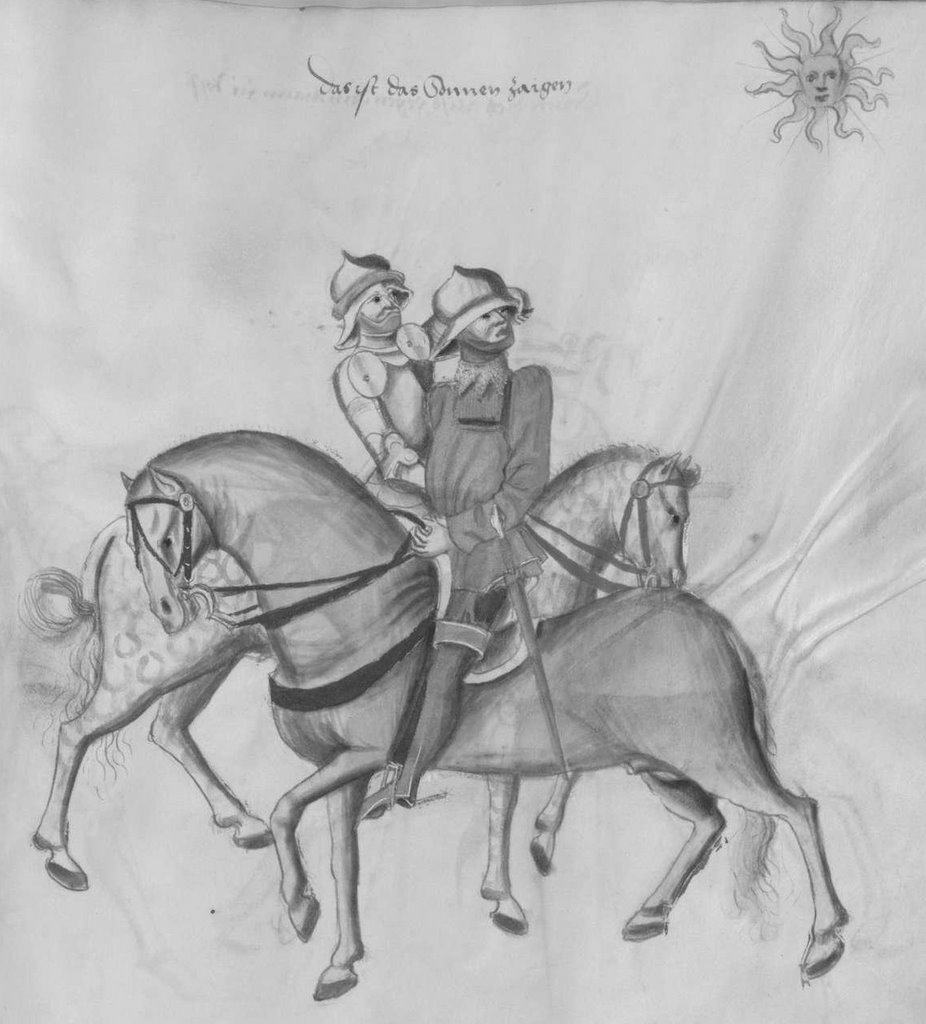
2 combattants on horseback look at the sun

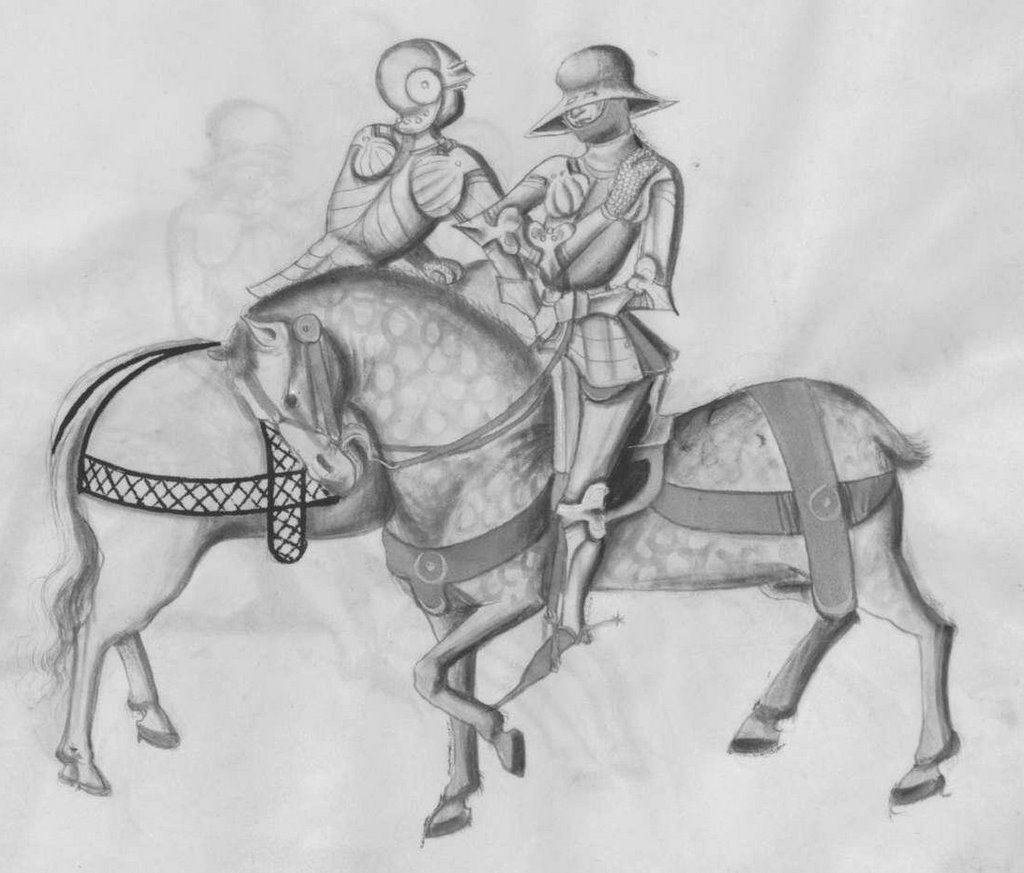
unarmed combat on horseback in armour

sword fighters on horseback salute to each other

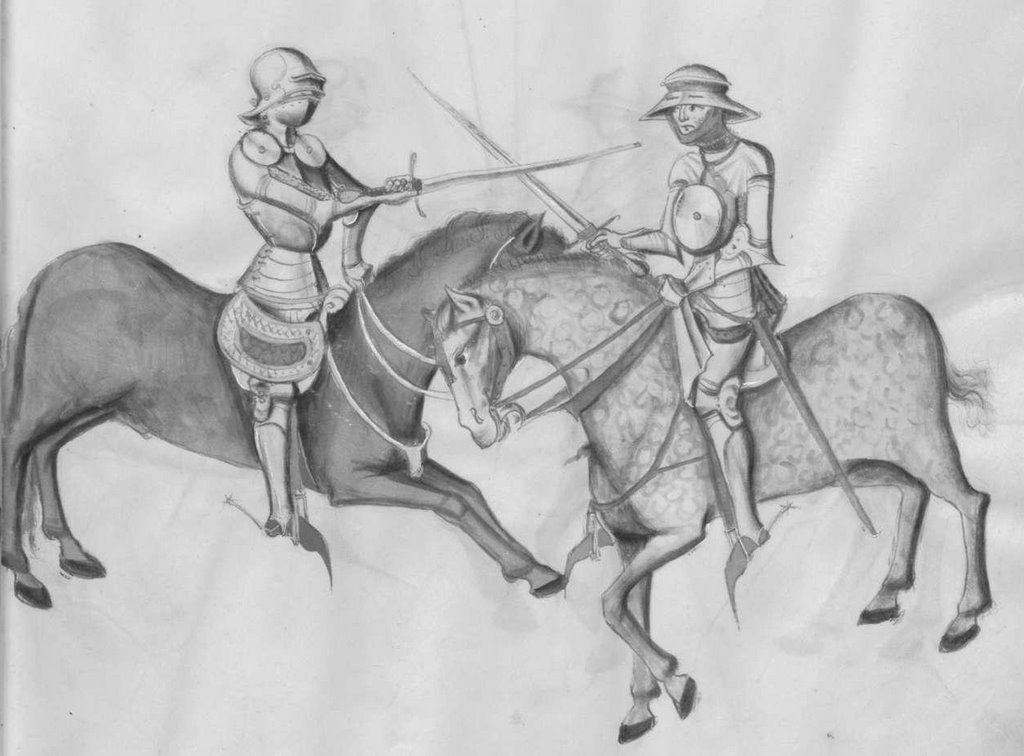
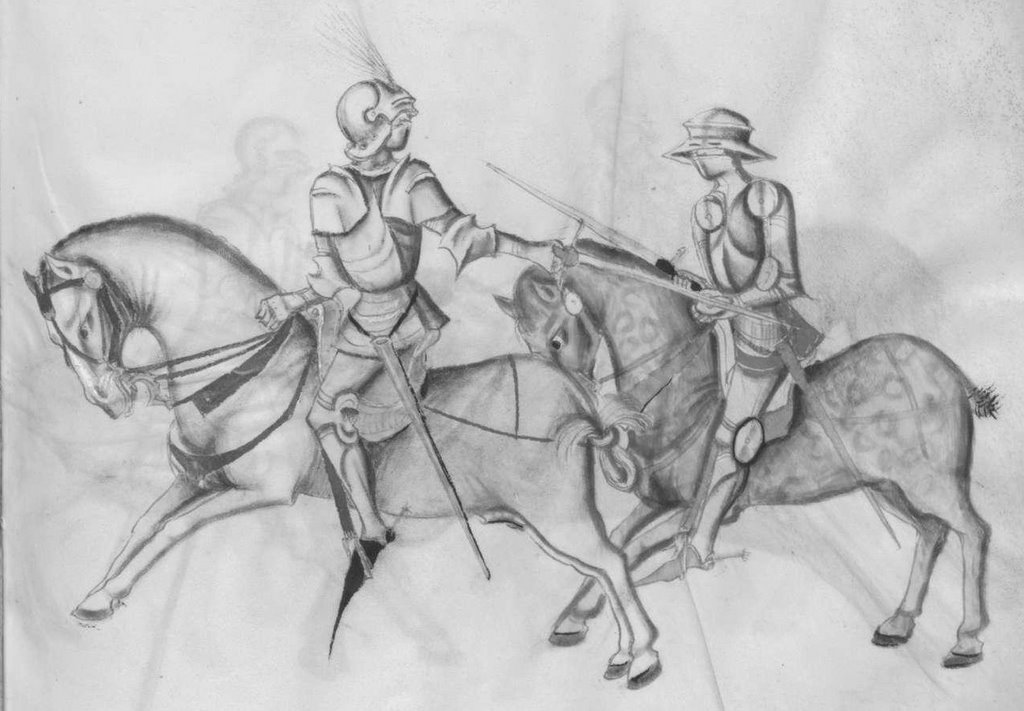
sword fight on horseback

sword fight on horseback technique

sword fight on horseback: more technique

jousting: light horse

jousting: dark horse

jousting: covered face


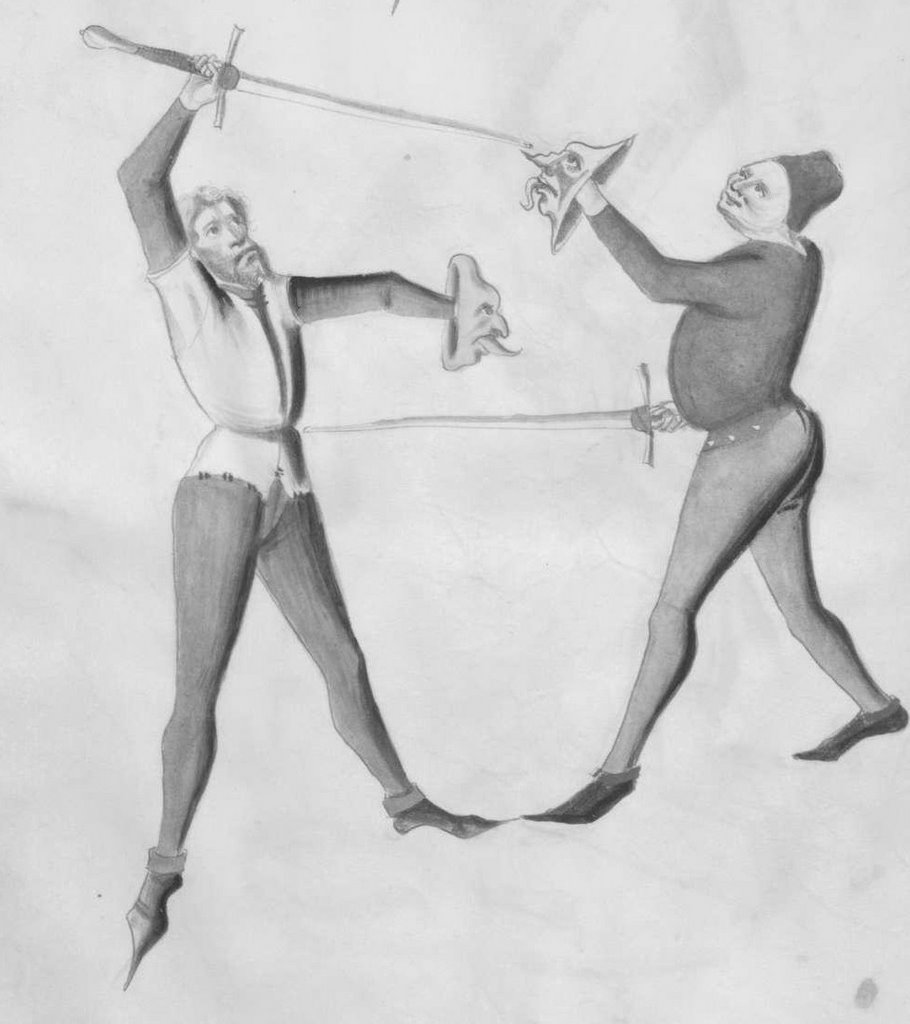
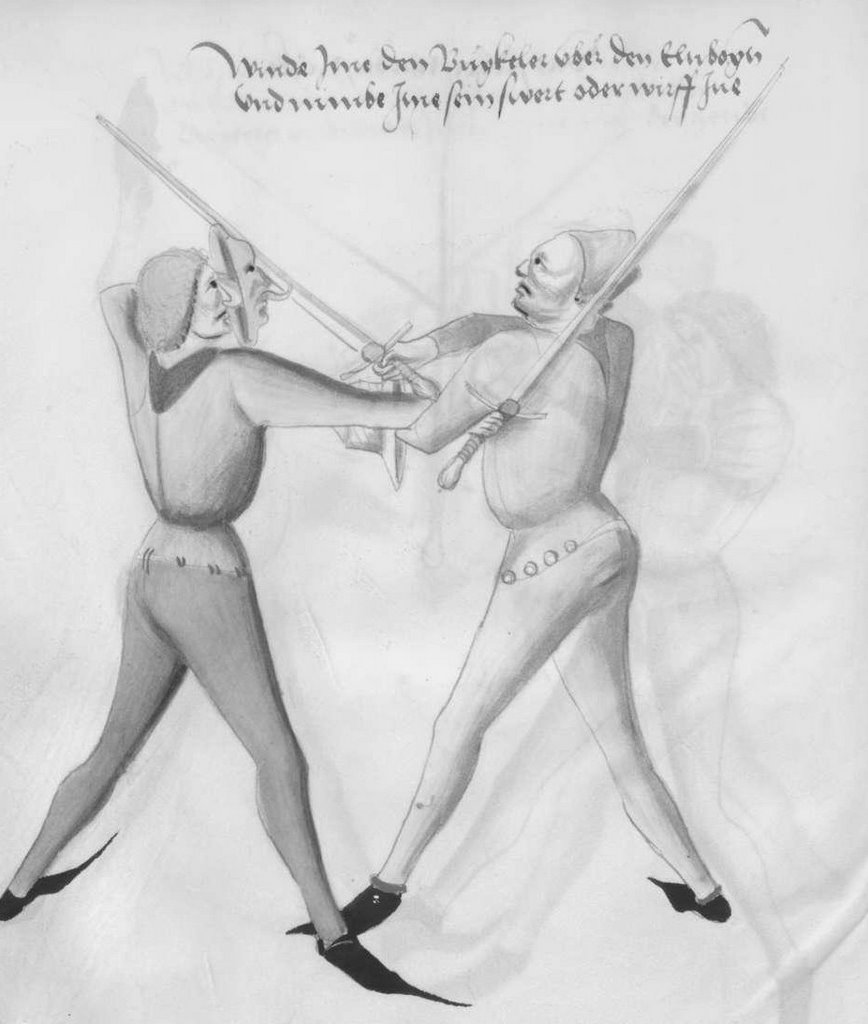
'Kunst des Fechtens' (the Art of Fighting) refers to the traditions and written manuals associated with the german school of combat techniques in the middle ages. Among these Fechtbücher (fight manuals) is the untitled fechtbüch of Paulus Kal, depicted above and in the previous post, which is online at the Bayerische Staatsbibliothek. (produced sometime before 1479)
Paulus Kal was a Master fencing/combat instructor employed in the mid-15th century by a Bavarian Duke and he was also a contemporary and rival of the more famous Hans Talhoffer. Both produced fechtbücher associated with the legendary 14th century Grandmaster swordsman, Johannes Liechtenauer. And it is from Kal's writings that we know something of the manner by which the secret Liechtenauer techniques were disseminated. (geneaology of fight schools)

There is little online about Kal and in fact I was reminded during searching that it's not simply information overload that can be a problem using the internet - information duplication makes searching frustrating. There are many sites that simply reproduce a single line entry on Kal from wikipedia and one other encyclopedic source - I kept seeing a link to the Bayerische manual above in a bunch of sites; the very same link that I had added to the wikipedia entry last night.

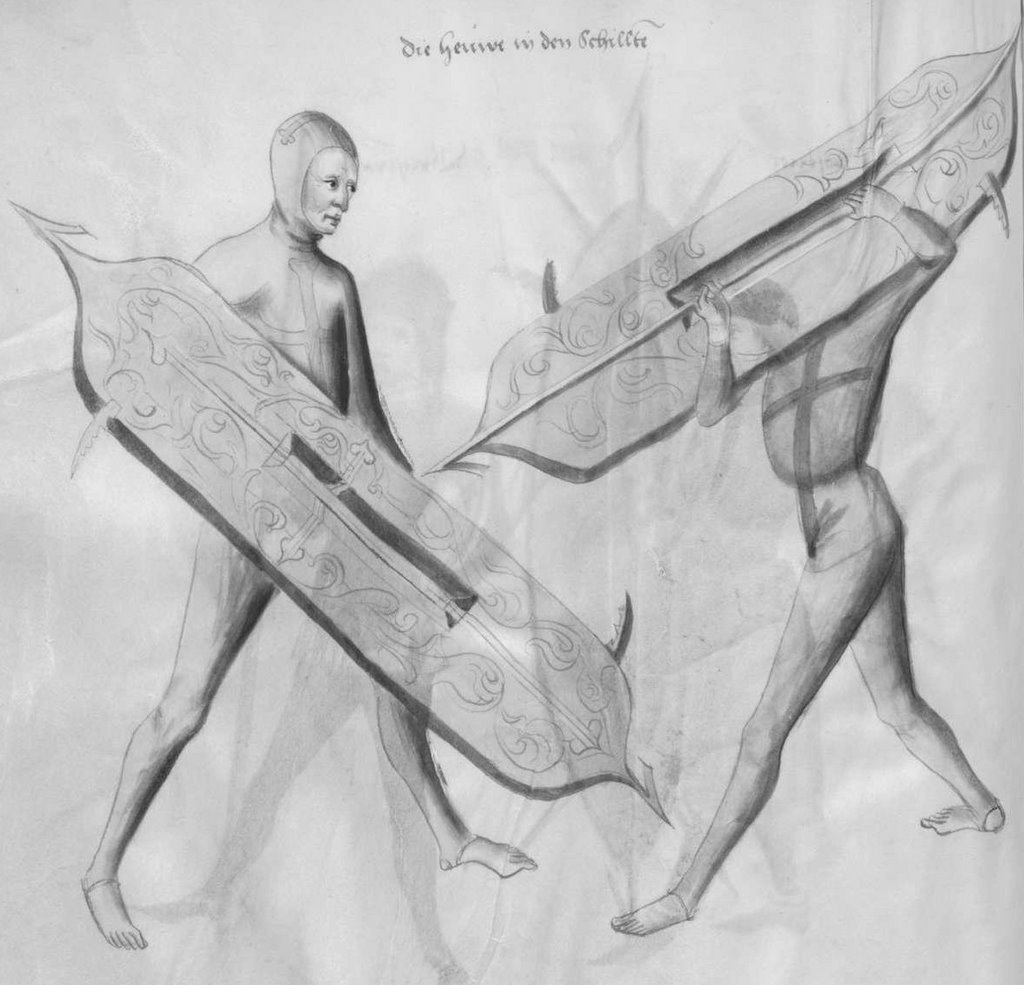
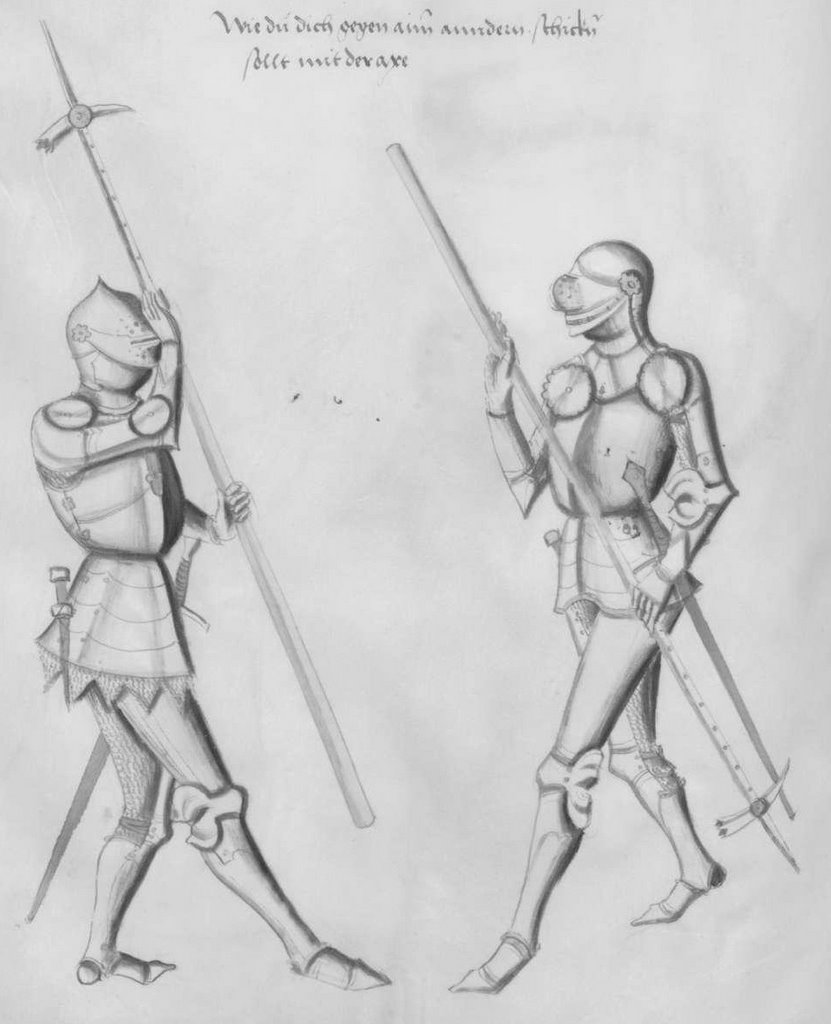
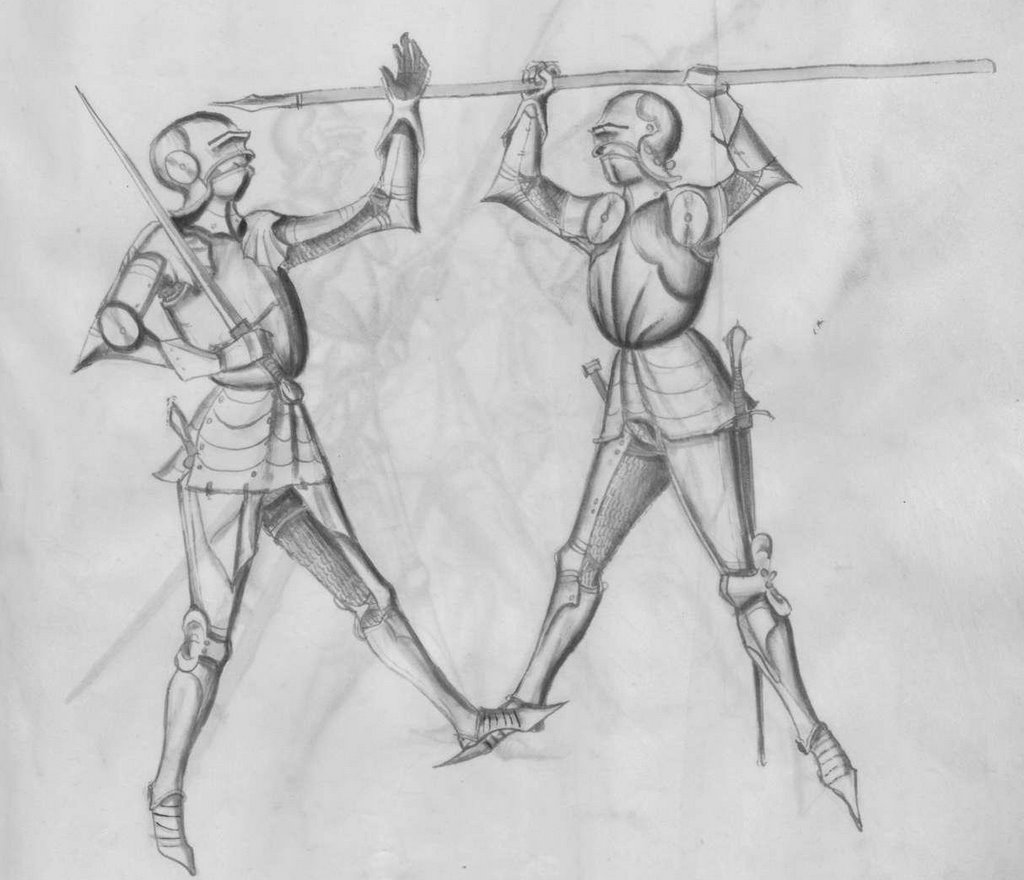
Kal's manual is about 200 pages long with beautiful and detailed illustrations about fighting on horseback with sword and lance, on foot with lance, sword, dagger and poleaxe, duelling with shields; sword and buckler techniques and wrestling, on virtually every page. There are a couple of pages regarding the provenance of the work at the beginning of the site but I don't read german and couldn't copy it from an image into a translator. So I'm unsure whether the work was first produced in black and white or not - the digitized images are a little 'different' to my mind and the subtlety of the shading suggests to me that it probably was in colour; the link below suggests this but they are not categorical.

I swear that it's by amazing coincidence that a limited edition leather bound version in colour of this work - 'In Service of the Duke' - is about to be released by Chivalry Bookshelf. They have example pages for viewing and you can read snippets of commentary if you squint.

Paulus Kal: Kunst des Fechtens I

titlepage

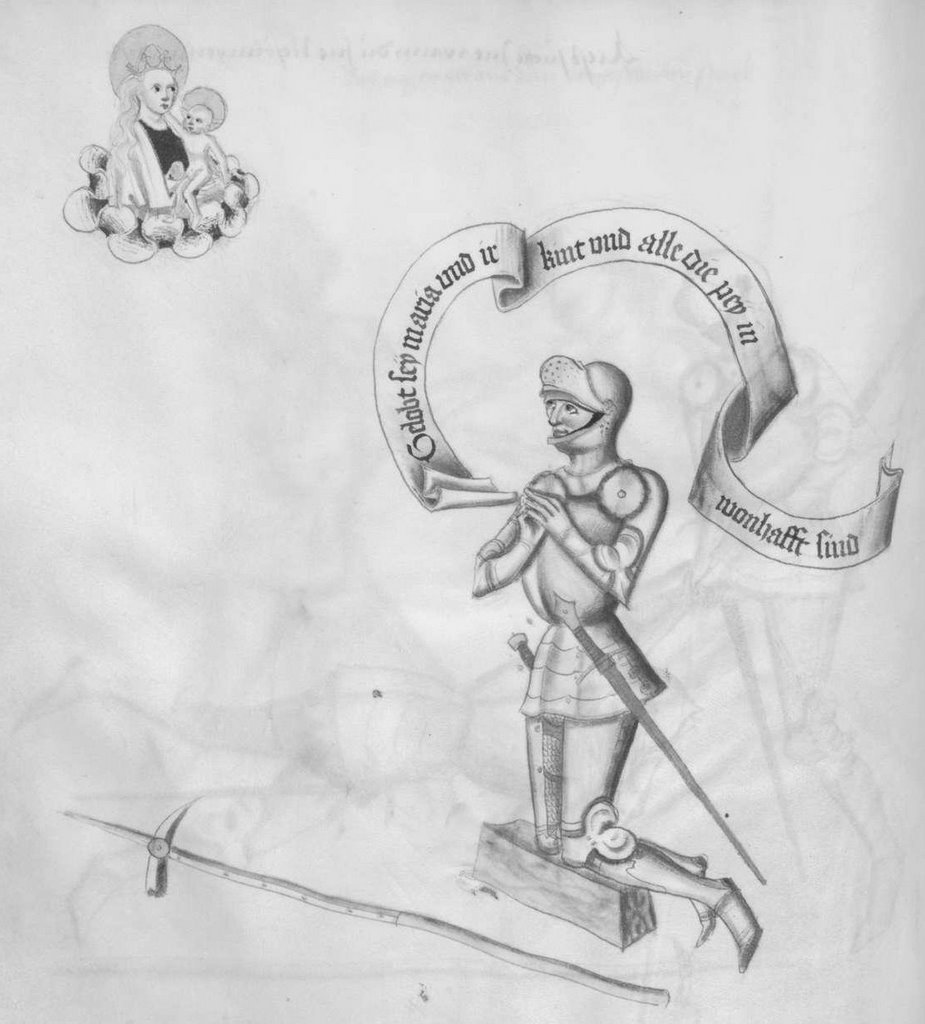
praying to Mary after victory

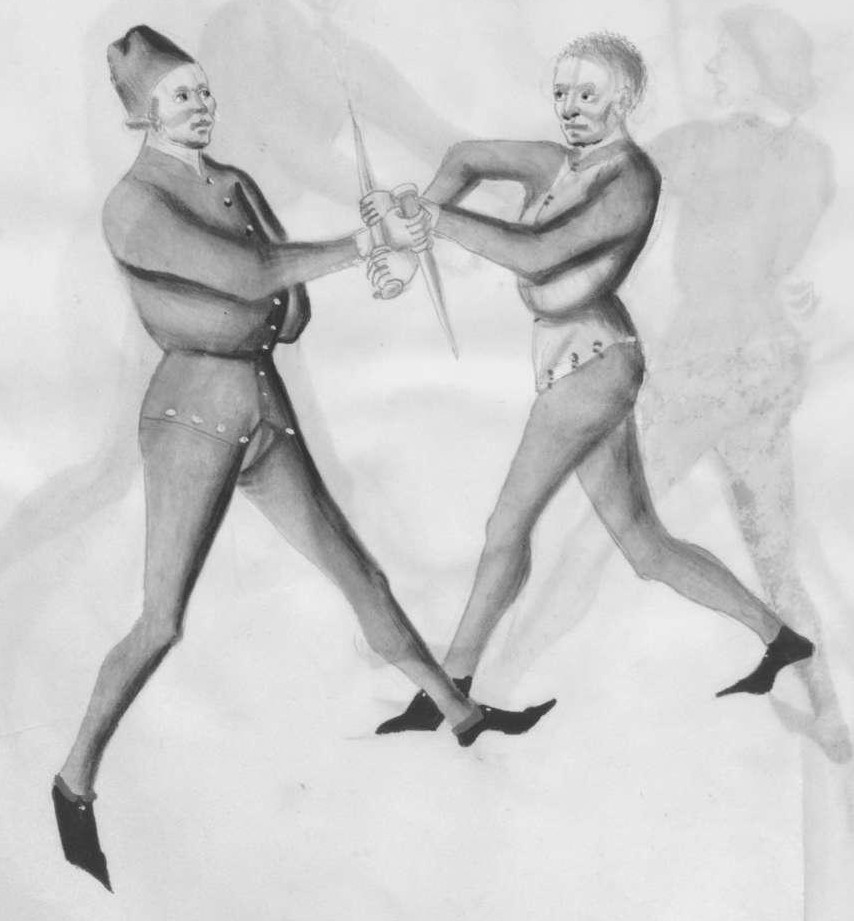
wrestling

dagger combat

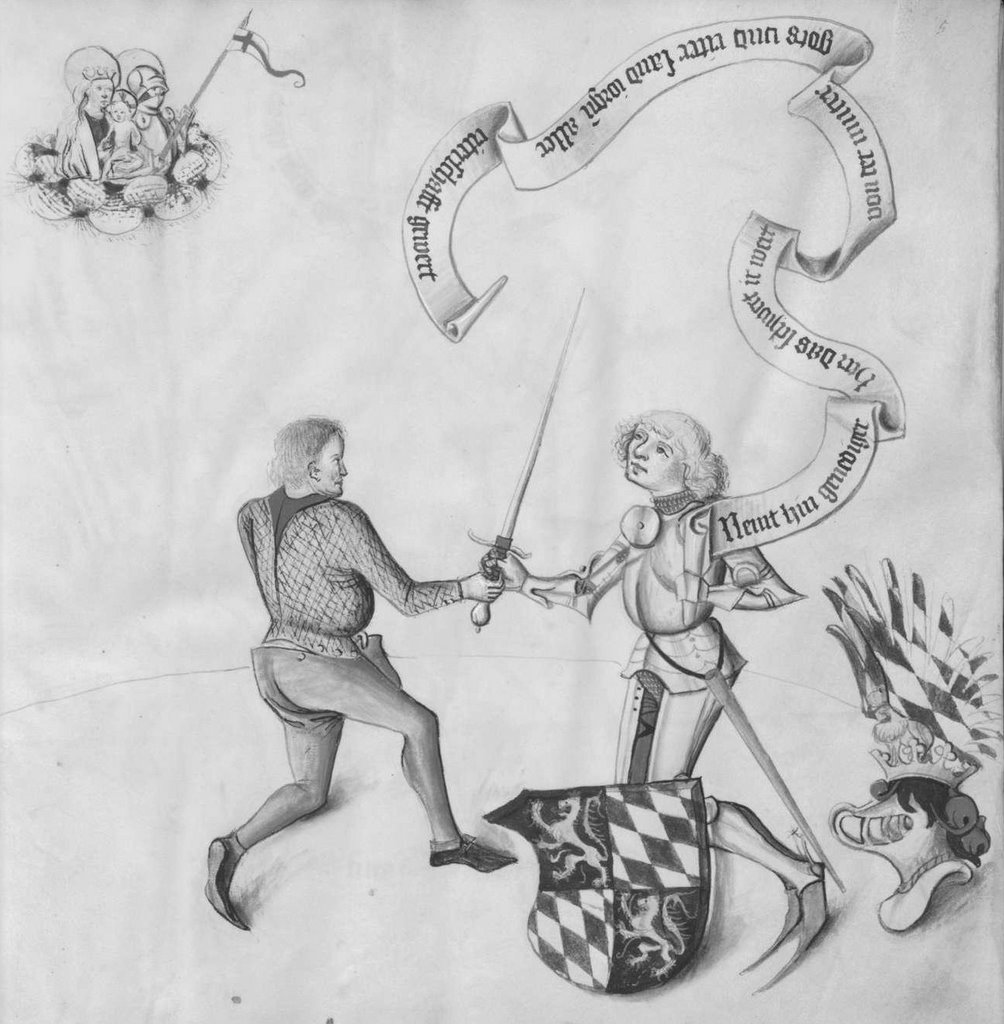
sword battle with handshields

sword battle with handshields technique

sword battle with handshields victory

shield combat

shield combat technique

pole fighting

spear versus sword

The Fechtbüch [or fechtbook or fighting/fencing manual] of Paulus Kal was digitized and uploaded by the Bayerische Staatsbibliothek last year. (sometime before 1479) More information in Part II.

Thursday, September 14, 2006

Cruydeboek

title pages

cyclamen

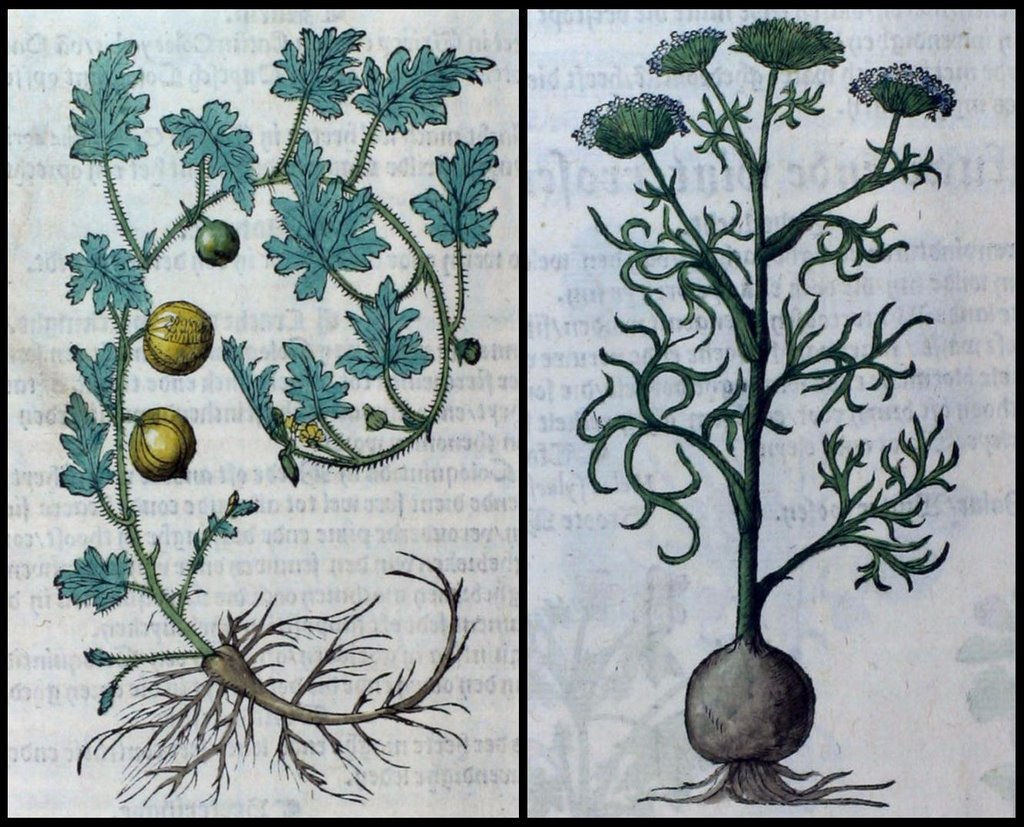
2 plants

4 plants

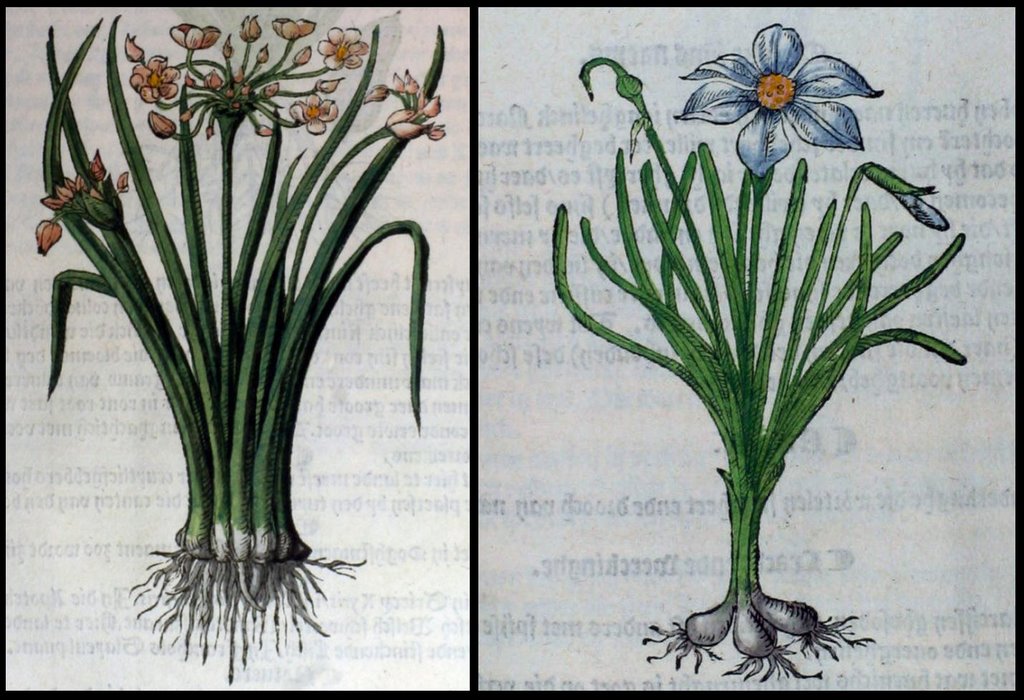
2 more plants

4 more plants

2 flowering plants

4 plants again

another 2 plants

2 more plants again

2 chilli plants and 2 flowering plants

2 more flowering plants

Rembert Dodoens (1517-1585) was a medical Professor from Belgium with a particular affection for botany. His interest led him to publish a number of works on the medical aspects of plants.

'Cruydeboek' from 1554 was heavily influenced by the work of Leonard Fuchs. Indeed, many of the woodcuts were taken from Fuchs' Herbal but Dodoens added a large number of new illustrations and wrote his own text. The work veered towards being a pharmacopeia and Dodoens broke with the alphabetical arrangement of Fuchs, grouping plants according to their characteristics in 6 different sections (the first image above shows the cover of 4 of these).

'Cruydeboek' was hugely successful, particularly after it was translated from the flemish into french ('Histoire des Plantes' by Charles de L'Ecluse, 1557) and english ('A Niewe Herball' by Henry Lyte, 1578). "It became a work of worldwide renown, used as a reference book for two centuries."

Tuesday, September 12, 2006

Trades

stonemason blacksmith

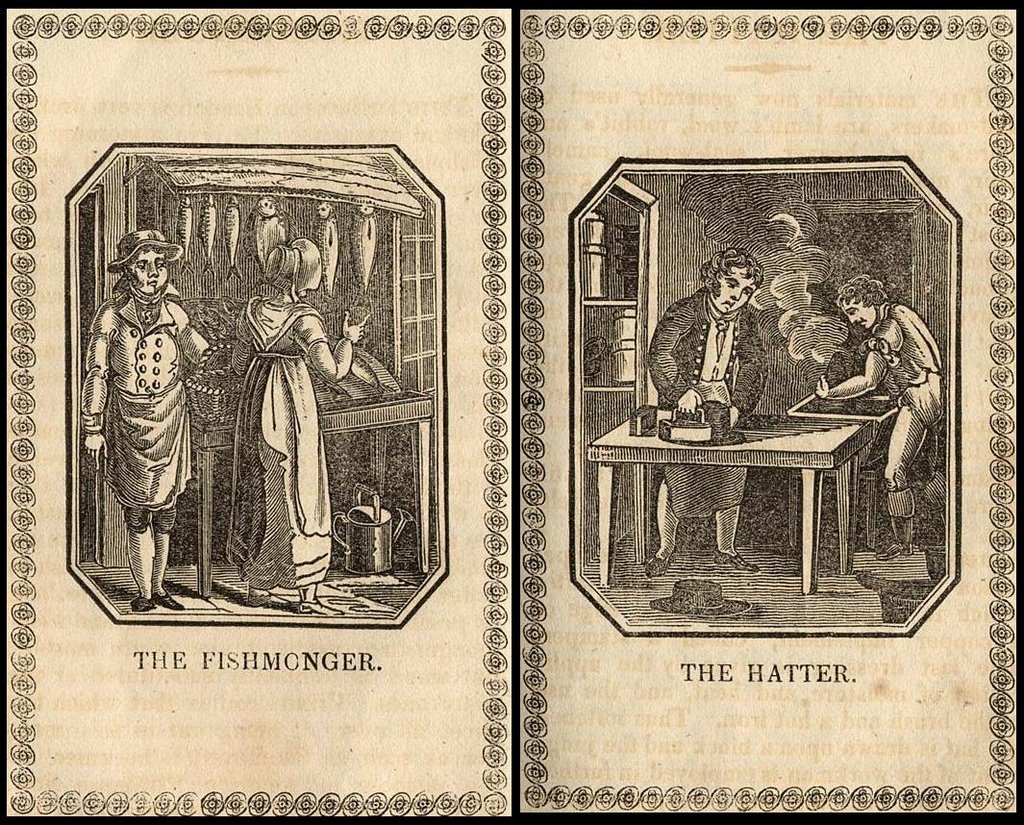
fishmonger hatter

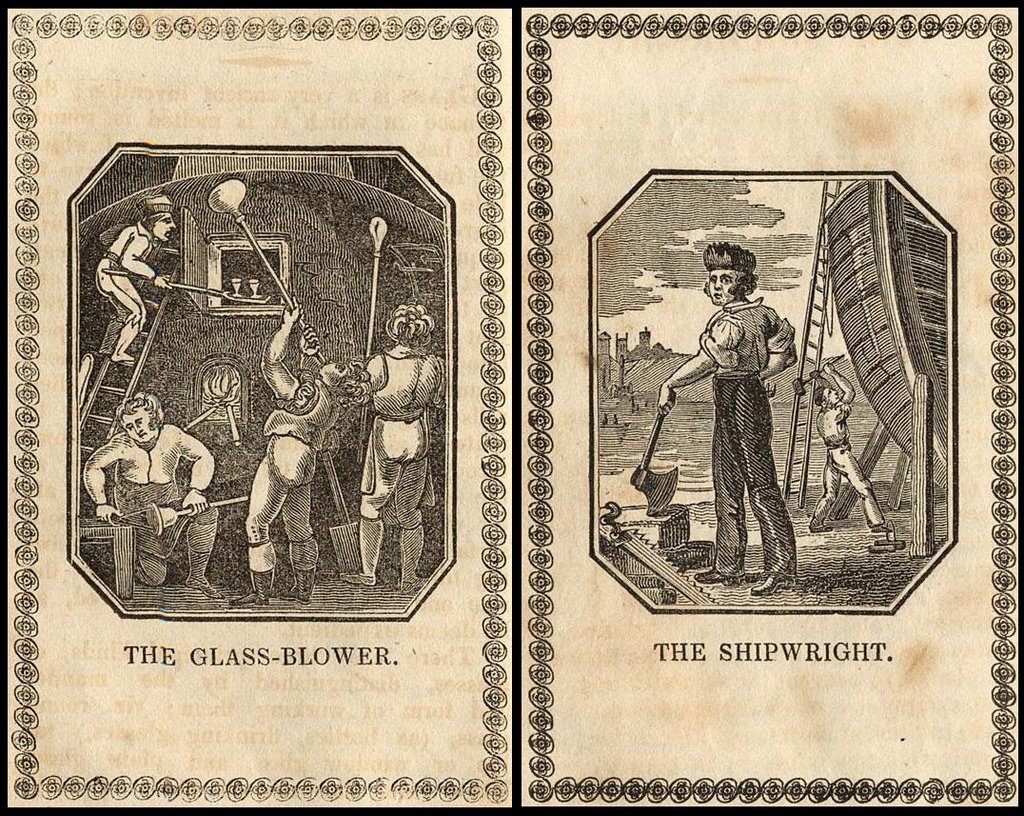
glassblower shipwright

letterpress and copperplate printers

bookbinder and blogger

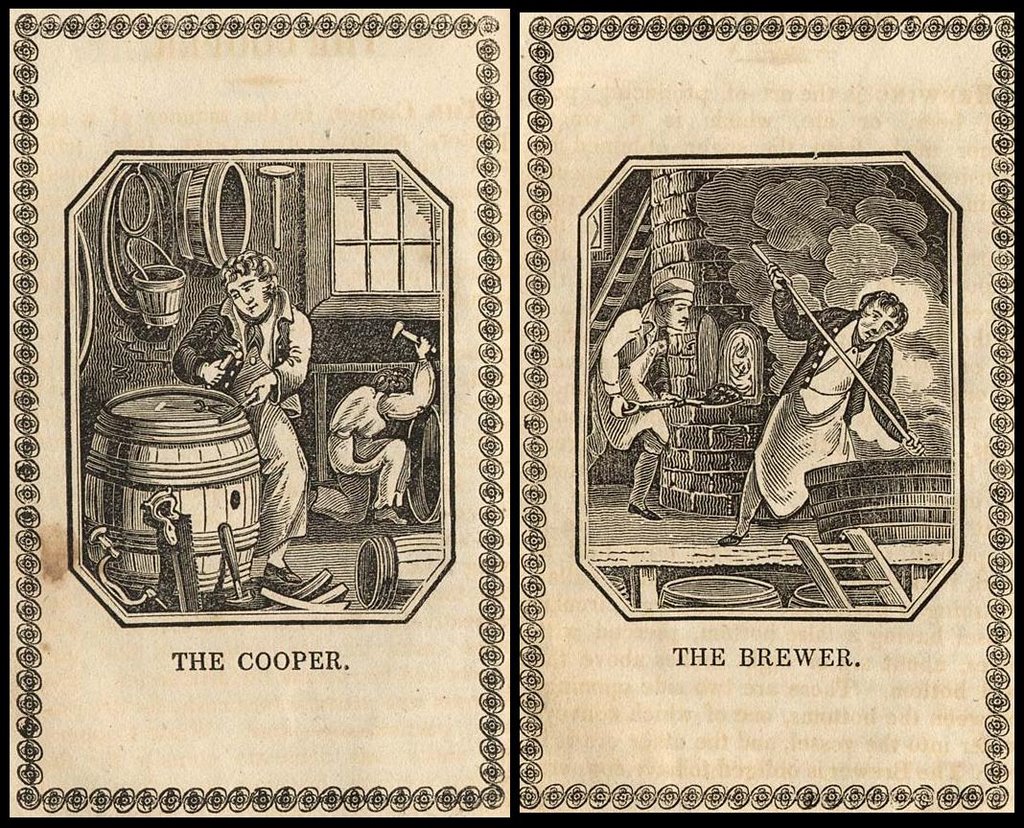
brewer cooper

engraver papermaker

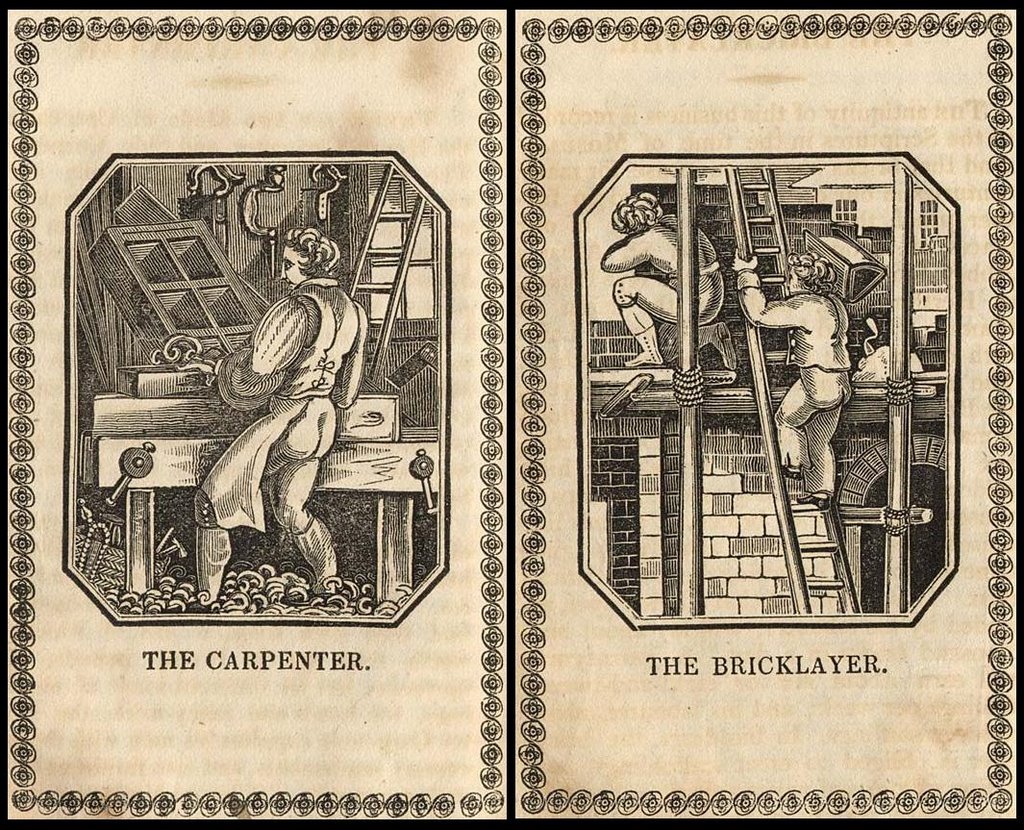
carpenter bricklayer

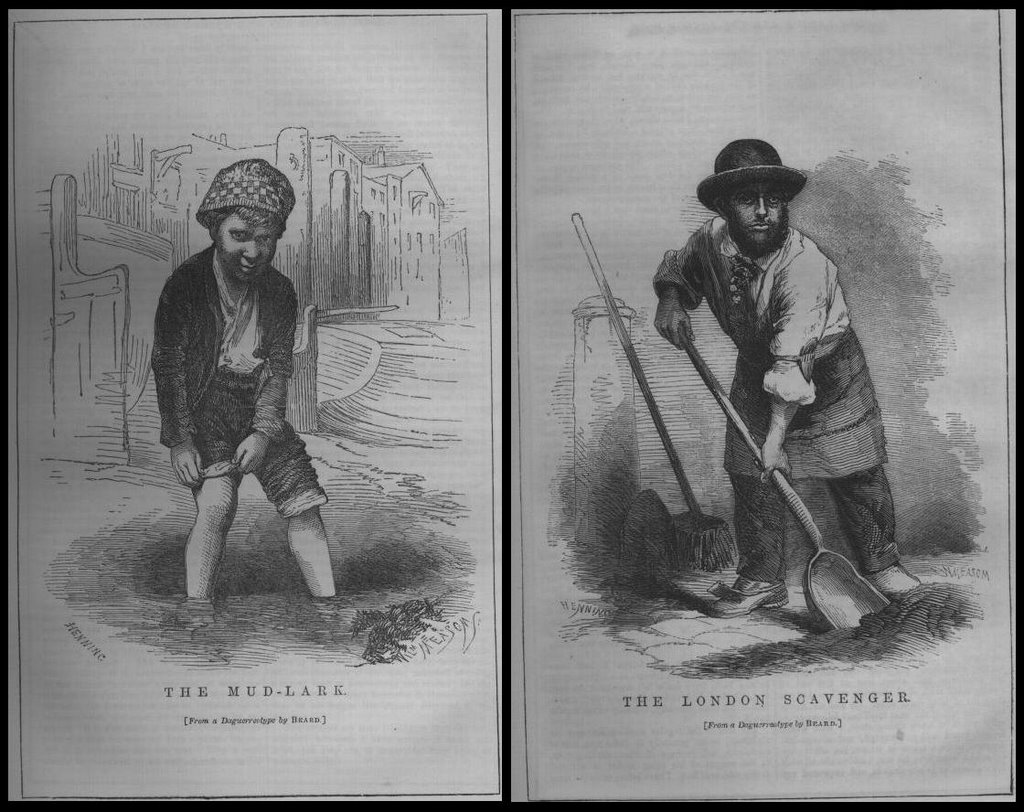
scavenger mudlark

dogseller disabled streetsweeper

rubbish carter and bootseller

birdsnest seller and bonegrubber

The top section of images come from 'The book of trades; or, Familiar descriptions of the most useful trades, manufactures, and arts practised in England : and the manner in which the workmen perform their various employments. London: A. K. Newman, undated, inscribed 1829' at the Digital Library for the Decorative Arts and Material Culture from the University of Wisconsin. {click on 'Display Gallery View'} [And apologies to normanpublishing]

The rest of the images are from 'London Labour and the London Poor' [Volume 2] 1861 by Henry Mayhew, among the 'The Bolles Collection on the History of London' at Tufts Digital Library. [Mayhew: CISS/Wikipedia] -- This is a truly fascinating (not to mention patronising) and detailed survey of the wretched vagabonds and street hustlers of Victorian London. It includes extensive interviews of subjects and methodical profiling of the seediest 'occupations'. It is the Dickens of non-fiction.


Of the Street-Finders or Collectors
"These men, for by far the great majority are men, may be divided, according to the nature of their occupations, into three classes:--

1. The bone-grubbers and rag-gatherers, who are, indeed, the same individuals, the pure-finders, and the cigar-end and old wood collectors.
2. The dredgermen, the mud-larks, and the sewer-hunters.
3. The dustmen and nightmen, the sweeps and the scavengers.

The first class go abroad daily to find in the streets, and carry away with them such things as bones, rags, “pure” (or dogs’ dung), which no one appropriates. These they sell, and on that sale support a wretched life.

The second class of people are also as strictly finders; but their industry, or rather their labour, is confined to the river, or to that subterranean city of sewerage unto which the Thames supplies the great outlets. These persons may not be immediately connected with the streets of London, but their pursuits are carried on in the open air (if the sewer-air may be so included), and are all, at any rate, outof- door avocations.

The third class is distinct from either of these, as the labourers comprised in it are not finders, but collectors or removers of the dirt and filth of our streets and houses, and of the soot of our chimneys."