Monday, November 7, 2005

Walter J Phillips

Headingly 1917 etching

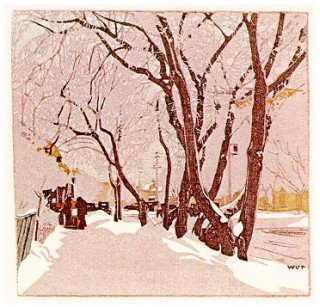
Rime 1934 colour woodcut on paper

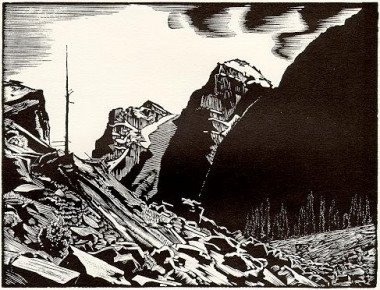
Valley of the Ten Peaks 1930 wood engraving
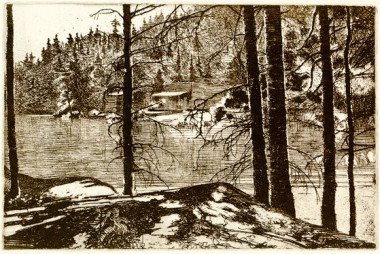
Wooded Shore Near Keewatin 1917 etching

Walter J Phillips (1884-1963) grew up in England and after a few years in South Africa, he spent the vast majority of his life in Canada. It may have been his early background that instilled a traditionalist outlook in his many print and artworks.

Lily 1932 wood engraving

If I was to criticize any of the writing in the links below it would be to point out that the justifications and apologies offered for Phillips not siding with the modernist paradigm that developed in the early part of the 20th century art world are wholly unnecessary. His work is both naturalistic and poetic and doesn't need bolstering with rationalizing wordsmithery. It stands ably on its own merits.

That said, the first link below is outstanding, despite being a couple of years old. It has images of almost all of the works produced by Phillips and includes essays, commentary and chapters from his only book on colour wood-cut techniques. I've spent a very pleasurable hour rummaging through.

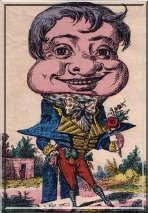
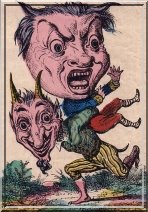
Démon Cadet


La dernière soirée de Cadet Roussel. Anonymous (? at least the text is) lithographs. A 19th century warning against VD perhaps? My (very) modest french didn't quite work it all out. [Bonus: Soixante transformations comiques and La vengeance de Polichinelle] (via)

Sunday, November 6, 2005

Federal Theatre Project


Federal Theatre Project Poster, Costume and Set Design Slide Collection at George Mason University [The above are from 1936-1938]

Juxtaposing


These striking images come from Heroum Epistolae: ad Romanum exemplar recusae by Jakob Biderman in 1634, again at the University of Mannheim. There are only a couple of other images, more of your standard religious fare really. I much prefer these myself.

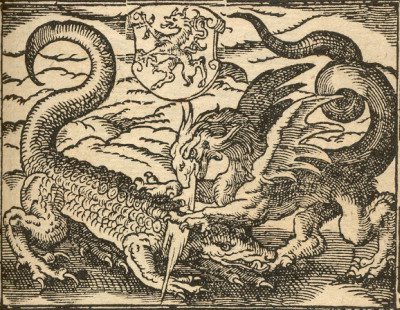
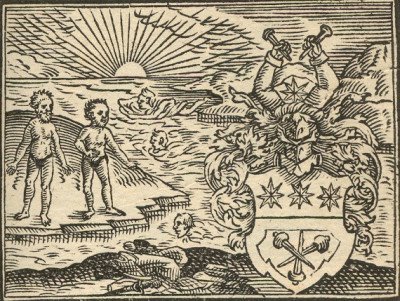
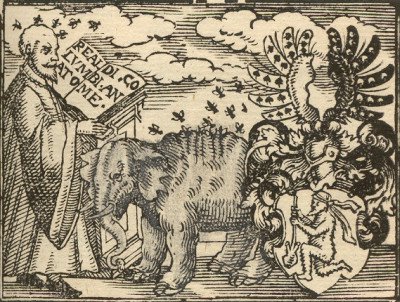
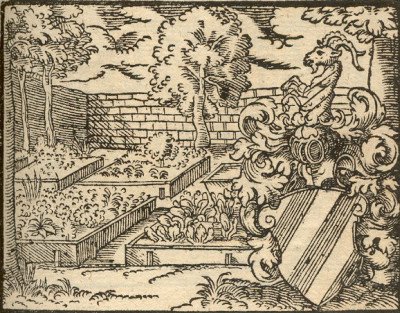
Emblemata Physico Ethica


"Many doubt," saith Nicholas Taurellus, "whether the devil
can cure such diseases he hath not made, and some flatly deny it,
howsoever common experience confirms to our astonishment, that
magicians can work such feats, and that the devil without impediment
can penetrate through all the parts of our bodies, and cure such
maladies by means to us unknown."


German philosopher, theologian and physician Nicolaus Taurellus (1547-1606) was notable for his rejection of the prevailing Aristotlean scholastics. He considered that philosophy ought to be based on biblical christianity. He published numerous philosophical treatises including Emblemata Physico Ethica in 1595 which is hosted by Mannheim University. (Links to the thumbnail pages)

The book is divided into three sections with a discourse opening, the emblemata and a final 'nude' emblem section, without images. Most of the emblems have emblazoned heraldic plates which must have complicated attempts at elucidating the author's meanings. Although I suppose the language of heraldry was second nature to most literate people in those times. There are 84 woodcut images all told.

Addit: "Most of the 84 beautiful emblems, partly imitated from Jost Amman's Stamm- und Wappenbuch (1579), and here in very fresh impressions, were dedicated to various personages from Germany, Poland and Holland, often together with their coat-of-arms."

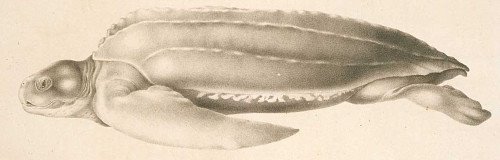
Fauna Japonica


"This work of Philipp Franz Balthazar von Siebold (1796-1866) was compiled by three scholars of the Leyden Museum on the basis of the enormous number of zoological specimens collected by Siebold during his stay in Nagasaki 1823-1829 and of rough sketches by the Japanese artist Keiga Kawahara and others. It was published serially in five volumes over the long period of 1833-1850.This was the first material written in a Western language on Japanese fauna, and it introduced Japanese fauna to the West on a wide scale."

Fauna Japonica, which was written in french, is displayed at the Kyoto University website. I didn't venture into the birds or fish today. [Again, via]